
Bus Loop:Jam Master
Shoyo Mobi Tech Limited-MarbleCasual
4.9172.00 Reviews
- Version
- 16.0
- Installs
- 1.00M
- Age Rating
- Everyone
Screenshots
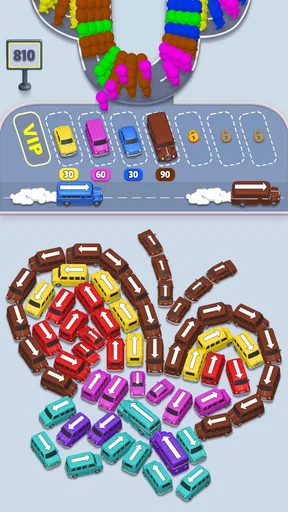
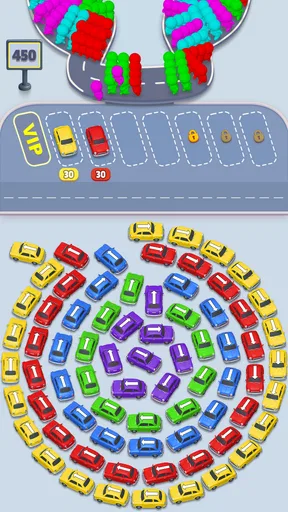
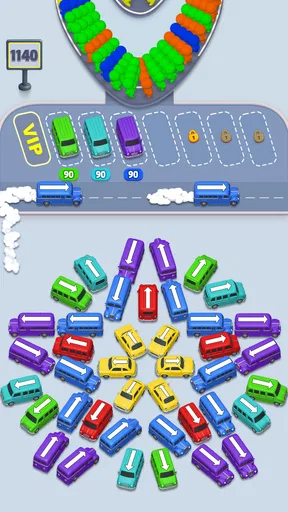
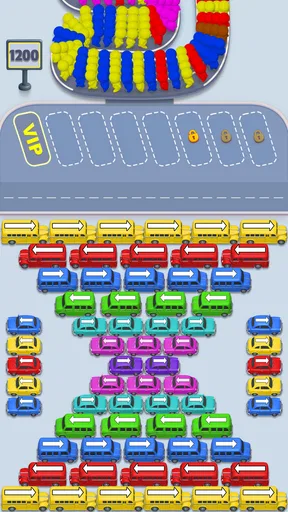
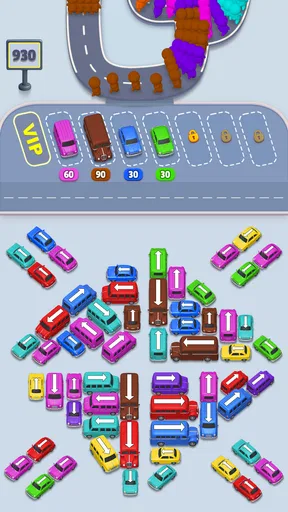
Our Review of Bus Loop:Jam Master
 Analysis by Appyee
I went into Bus Loop:Jam Master expecting a quick, disposable puzzle and came away with something more deliberate than its simple premise suggests. The game asks me to manage buses, untangle crowded routes, and make each move with enough care to avoid turning a manageable board into a complete standstill. It is easy to understand within moments, but the better decisions are not always obvious, which gives each short session a useful little layer of tension.
My overall view is straightforward: this is a good fit if you enjoy casual puzzles built around planning, visual order, and gradually solving a messy situation. It is less suitable if you want a fast action game, a deep story, or a puzzle experience that stays completely free from repetition. The appeal comes from the satisfaction of finding a clean sequence, not from a large cast of characters or a complicated world.
Why the simple bus idea works better than expected
The central challenge is easy to describe: buses are caught in a jam, and I need to control them in a way that clears the blockage. That basic setup gives the game an immediately readable objective. I am not spending time learning a long rulebook before playing. Instead, I can look at the arrangement, identify what is blocking what, and begin testing a route through the problem.
What makes the idea work is that every move affects the space around it. A bus that seems ready to leave may still be the wrong choice if moving it exposes another obstruction or removes the room needed for a later vehicle. The best solutions usually come from reading the whole layout first rather than tapping the first available option. That small shift—from reacting to planning—is where the game earns its “master” label.
I especially liked the way a crowded board encourages me to pause. Many casual games push me to act quickly, but this one rewards a moment of observation. I can scan the available paths, notice which vehicle has the most limited movement, and treat that bus as the key to the puzzle. This is a useful habit for new players: do not begin with the easiest-looking move; begin with the move that changes the board most meaningfully.
The game’s casual classification feels accurate. It is approachable enough for a short break, but the better puzzles can still demand concentration. I could imagine playing while waiting for an appointment, then returning later when I wanted something that occupied my attention without requiring a large time commitment. It sits closer to a compact logic exercise than to an idle game, even though the presentation is designed to remain accessible.
There is also a pleasant sense of progress in clearing a jam one decision at a time. The board starts as a visual problem, and the solution gradually becomes visible as the buses move into better positions. That transformation gives the game a clear rhythm: inspect, commit, correct if needed, and finish with an uncluttered result. It is a modest idea, but it provides a stronger payoff than a puzzle that simply asks me to match identical objects.
How I approach a difficult board
My most reliable method is to identify the bus with the fewest realistic options before touching anything. If one vehicle is surrounded while another has several possible directions, the restricted one usually tells me more about the structure of the level. I then look for the move that creates space for it, even when that move does not appear to make immediate progress.
A second useful habit is to avoid treating every open lane as an invitation. An open route can be valuable later, so using it too early may leave the board harder to read. I try to preserve flexible spaces until I understand which buses genuinely need them. This is one of the game’s less obvious lessons: a move can be legal and still be strategically poor.
When I make a mistake, I do not immediately restart mentally from the beginning. I examine the point where the board became less flexible. Usually, the problem is not the final move that causes the jam; it is an earlier decision that reduced the number of available choices. Thinking in terms of flexibility makes the puzzles feel more logical and helps me improve rather than simply guessing again.
For a realistic everyday session, I would play a few boards during a commute or while taking a short break from work. I would keep the sound at a comfortable level, focus on one layout at a time, and stop after a successful solve rather than turning the session into an exhausting marathon. The game works well in that setting because its premise is immediately visible and the mental task has a natural beginning and end.
The strongest part is the decision-making, not the theme
The bus theme gives the puzzles a recognizable identity, but the real strength is the way it turns movement into a sequence problem. I am not merely searching for an attractive arrangement. I am trying to predict consequences: which bus should move first, which space must remain open, and whether a temporary detour will make the later solution easier.
That structure makes the game more satisfying than many casual alternatives that rely mainly on rapid matching or repeated tapping. In a typical match-style game, I often focus on spotting the next combination before the board changes. Here, I spend more time thinking about order and access. Players who enjoy sliding puzzles, traffic-management puzzles, or compact spatial challenges will probably recognize the appeal quickly.
At the same time, it does not demand the commitment of a traditional strategy game. There is no need to learn a broad economy, manage a large roster, or remember a long chain of systems. The challenge is local and immediate: solve the arrangement in front of me. That makes it easier to recommend to someone who wants thoughtful play without a heavy learning curve.
The game’s audience response also suggests that this straightforward approach has found a broad audience. It has an average rating of 4.9 from around 47 thousand ratings, and it has passed one million installs. Those figures do not guarantee that every player will enjoy the same pacing, but they do fit my impression that the concept is easy to pick up and has enough puzzle satisfaction to keep many casual players interested.
Where the experience can lose momentum
The main limitation is that the core idea can become familiar. Once I understand the patterns behind the jams, some boards may feel like variations on the same question rather than genuinely new challenges. That is not a flaw in the basic design, but it affects how long the game remains exciting for players who need constant novelty.
I also think the experience depends heavily on how much variety the individual puzzles provide. A bus-based logic game has a naturally narrow focus, so it cannot rely on story, exploration, or character development to refresh the experience. If the arrangement does not feel meaningfully different, the act of clearing it can start to resemble routine work instead of a satisfying deduction.
That makes the game better for short, repeatable sessions than for an all-evening commitment. I would not choose it when I want a large adventure or a game with several distinct modes. I would choose it when I want a focused challenge that I can put down easily. The distinction matters because the same simplicity that makes the game welcoming can also make it feel limited to experienced puzzle players.
There is another trade-off around monetization. The game is free to play, but in-app purchases range from $1.99 to $99.99 per item. I would approach those options carefully and decide in advance whether I am comfortable spending anything. For me, the best way to enjoy a game like this is to judge progress by solving the layouts, not by feeling pressured to buy a shortcut or convenience. Players who dislike any purchase prompts should keep that part of the experience in mind before installing.
The age rating is Everyone, which matches the clean, non-violent puzzle premise. That makes it easier to consider for a shared family device or for younger players who enjoy logic games. Even so, I would still pay attention to how a particular player responds to difficult boards and optional purchases. A suitable content rating does not automatically mean every child will enjoy the same level of repetition or frustration.
Who should play it, and who should choose something else
I would recommend this game first to people who like visual problem-solving but do not want a demanding strategy title. It is a good match for someone who enjoys arranging objects, planning several moves ahead, and getting a clear sense of completion from a small task. It can also suit players who normally bounce off puzzle games because they find complicated instructions intimidating.
It is particularly useful as a “between things” game. I can imagine opening it after finishing a small chore, playing while waiting for food, or using it as a brief mental reset after reading too much on a screen. The bus-jam format gives me something concrete to solve, while the casual structure means I do not need to remember a complicated storyline or return at a precise time.
Parents considering it for a child may find the Everyone rating reassuring, and the visual objective is easier to explain than many abstract logic games. I would still encourage younger players to treat the puzzles as a reasoning activity rather than a race. Asking them to explain why a bus should move first can make the game more useful than simply tapping until the board clears.
On the other hand, I would steer competitive players toward a game with stronger head-to-head systems, rankings, or time-based pressure if those are their main priorities. I would also suggest a different casual title to anyone who prefers constant rewards, rapid matching, or a changing collection of mini-games. This one asks for patience, and its reward is the clean solution itself.
Compared with a conventional match-three game, Bus Loop:Jam Master feels slower and more deliberate. Compared with a full traffic simulator, it is much more approachable and far less concerned with realism or long-term management. Compared with a pure sliding-block puzzle, the bus setting makes the objective more intuitive, although players seeking the most abstract or difficult logic problems may eventually want something more demanding.
Practical details before installing
The game is free, so I can try its basic experience without paying at the start. The current version is 16.0, and it requires Android 6.0 or later. That makes compatibility fairly broad for Android users with older devices, although I would still leave enough storage and keep the operating system reasonably up to date for a smoother installation experience.
It was released on April 23, 2026, and the developer is Shoyo Mobi Tech Limited-Marble. Those details are useful when checking that I am looking at the intended title rather than a similarly named bus or traffic puzzle. The store short description is simply “Bus Loop:Jam Master,” while the longer summary presents the game as a challenge about controlling buses, solving jams, and mastering the loop.
The wording may be brief, but the actual decision for a new player is not complicated. If I enjoy casual spatial puzzles and accept that the central mechanic will remain the focus, the free download is easy to justify. If I already know that I lose interest when a game repeats one type of challenge, I would probably choose a broader puzzle collection instead.
I would also recommend deciding how to handle purchases before a child or another family member plays. The available items cost between $1.99 and $99.99 each, which is a wide range. I would use the device’s purchase controls and make sure everyone using the device understands that free installation does not mean every optional item is free.
My final recommendation
After spending time with it, I see Bus Loop:Jam Master as a focused casual puzzle rather than a full-scale game destination. Its best quality is the clarity of its central problem: buses create a visual knot, and I must find the order that releases them. The game rewards careful observation, preserves enough uncertainty to make mistakes meaningful, and fits naturally into short sessions.
Its weakness is the same simplicity that makes it approachable. Players who need a wide range of mechanics, story content, or sustained escalation may find the bus-jam format too narrow. The free-to-play structure and broad in-app purchase range are also worth considering, especially for families or anyone who prefers a completely uninterrupted experience.
For me, the verdict is positive with a clear condition: choose it for thoughtful, bite-sized puzzle solving, not for variety or spectacle. I would recommend it to a friend who likes untangling crowded layouts and wants a game that can be understood quickly but played more intelligently over time. I would skip it only if that friend wanted action, narrative, or a constantly changing set of challenges.
The developer has kept the idea direct, and that directness is what gives the game its charm. When I want a small problem that asks me to slow down, protect my options, and find a clean sequence, this is a worthwhile choice. It does not try to be everything, but within its narrow lane, it offers a satisfying reason to keep clearing the next jam.
Verdict
Strengths of Bus Loop:Jam Master
- Simple drag-and-drop controls are easy to learn.
- Short levels make it suitable for quick gaming sessions.
- Colorful visuals give the puzzles a cheerful presentation.
- Increasing difficulty keeps the gameplay engaging over time.
- Offline play is convenient when you have no internet access.
Limitations of Bus Loop:Jam Master
- Later puzzles can feel repetitive after extended play.
- Some levels may depend more on trial and error than strategy.
- Ads can interrupt the experience between completed levels.
- Limited gameplay variety may reduce long-term replay value.
- Small mistakes can force you to restart a nearly finished level.
Similar Picks in This Category
View All
My Talking Angela
Outfit7 Limited4.2

My Talking Tom
Outfit7 Limited4.3

Pou
Zakeh4.2

My Talking Tom 2: Pet Game
Outfit7 Limited4.3

Candy Crush Saga
King4.6

Bridge Race
Supersonic Studios LTD4.1
Frequently Asked Questions
What is Bus Loop: Jam Master and how is it played?
Bus Loop: Jam Master is a casual puzzle game centered on organizing buses and passengers in the correct order. You generally match waiting passengers with buses that have available seats and manage the board carefully to avoid blocking useful moves. Each level becomes more challenging through limited space, different passenger colors, obstacles, and increasingly complex layouts. It is easy to learn, but later stages require planning rather than simply tapping quickly.
Can I play Bus Loop: Jam Master without an internet connection?
The game is designed to be convenient for short play sessions, and many of its core puzzle levels can usually be played offline after installation. However, some features may require an internet connection, including advertisements, special events, cloud-related services, updates, or reward systems. If you are traveling or have limited data, it is best to open the game once while connected and check which features remain available in airplane mode.
Does Bus Loop: Jam Master contain advertisements or in-app purchases?
Bus Loop: Jam Master may include advertising, particularly between levels or when you choose optional rewards such as extra moves, hints, or a second chance. Depending on the version available for your device, it may also offer in-app purchases for removing ads, buying coins, or obtaining boosters. The game can generally be tried without paying, but users who dislike frequent interruptions should review the store listing and purchase settings before downloading.
Is Bus Loop: Jam Master suitable for children and casual players?
The basic controls and colorful presentation make Bus Loop: Jam Master approachable for casual players, including people who prefer simple games that can be played for a few minutes at a time. Nevertheless, difficulty increases as levels progress, and younger children may need help with planning later puzzles. Parents should also check the app’s age rating, advertising, and in-app purchase options, since these details can vary between Android and iOS versions.
What should I do if I get stuck on a level in Bus Loop: Jam Master?
When a level becomes difficult, avoid moving the first available bus immediately. Instead, study the passenger colors, available parking spaces, and the order in which buses can leave. Try to preserve open spaces for buses that are not yet ready, and use boosters or hints only after identifying the real blockage. Restarting a level can also help because the solution often depends on a safer sequence rather than faster tapping.
Play our best games!


